
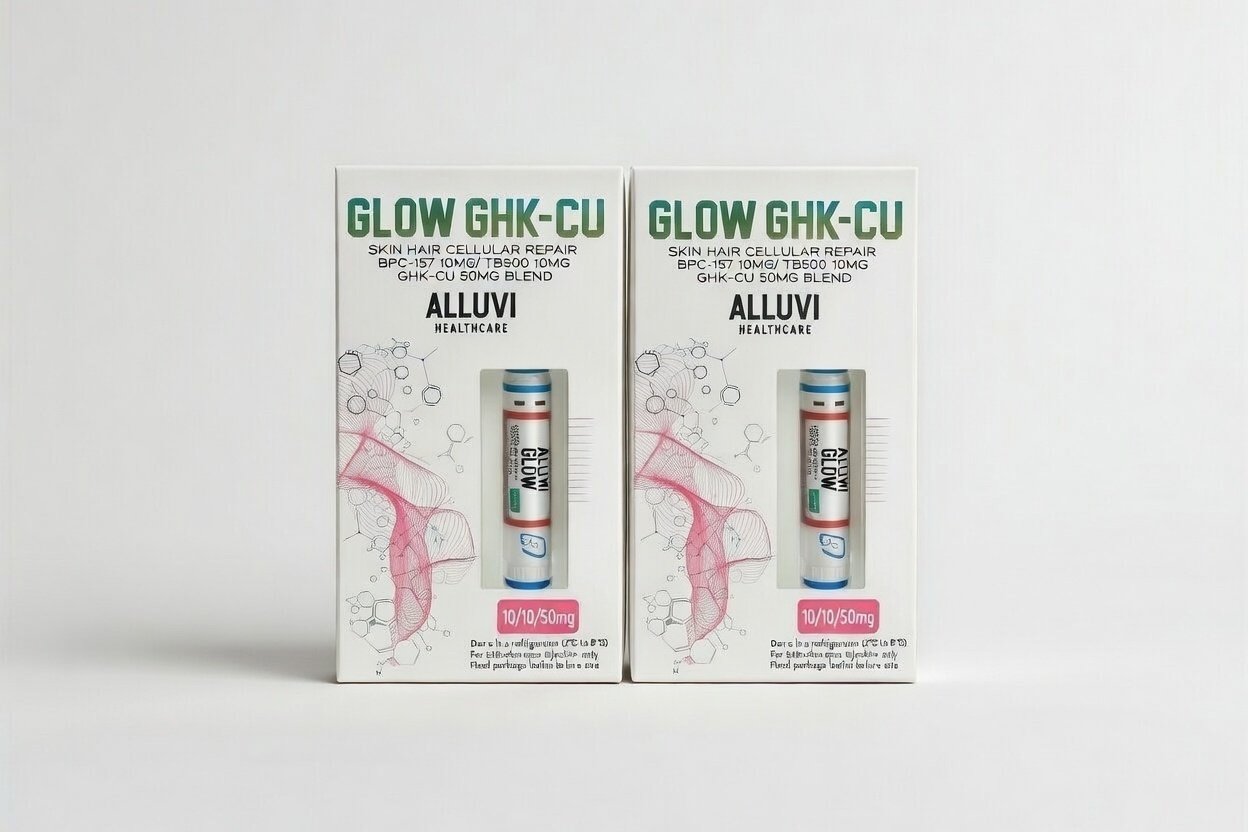
Glow GHK Cu
$155.00
Glow GHK Cu is a research-grade peptide widely used in laboratory, academic, and educational research. Our platform provides high-purity Glow GHK Cu 70mg with consistent stability, reliability, and quality, making it ideal for controlled studies and analytical experiments.
Purity: >99% (HPLC Tested)
Format: Lyophilized Powder (Sterile Vial)
Available Dosages: 50mg, 100mg
Research Dosage Protocol (Titration Schedule):
To minimize gastrointestinal side effects, researchers often follow a dose-escalation schedule similar to clinical trials :
| Week(s) | Dosage | Volume (using 5mg/mL solution) |
|---|---|---|
| Weeks 1-4 | 2 mg once weekly | 0.4 mL (40 units) |
| Weeks 5-8 | 4 mg once weekly | 0.8 mL (80 units) |
| Weeks 9-12 | 8 mg once weekly | 1.6 mL (160 units) |
| Week 13+ | 12 mg once weekly (maintenance) | 2.4 mL (240 units) |
1. Featured Product: GHK Cu (Copper Peptide) – The “Glow” Peptide
SKU: PU-GHK-50MG
Purity: >99% (HPLC Tested)
Format: Lyophilized Powder (Sterile Vial)
Available Dosages: 50mg, 100mg
GHK Cu Product Overview
GHK Cu (Glycyl-L-Histidyl-L-Lysine Copper Complex) is a naturally occurring copper-binding peptide found in human plasma, saliva, and urine. First discovered in the 1970s, it has become one of the most extensively studied peptides in regenerative medicine and dermal research .
Often referred to as the “Glow Peptide” within research communities, GHK-Cu exerts profound effects on tissue remodeling, skin architecture, and systemic inflammation. Its concentration in human plasma declines significantly with age—dropping from approximately 200 ng/mL in young adults to less than 80 ng/mL by age 60—making it a focal point for age-related research .
The copper ion is critical to GHK-Cu’s mechanism of action. The peptide acts as a natural copper delivery system, facilitating enzymatic processes essential for extracellular matrix (ECM) synthesis and repair .
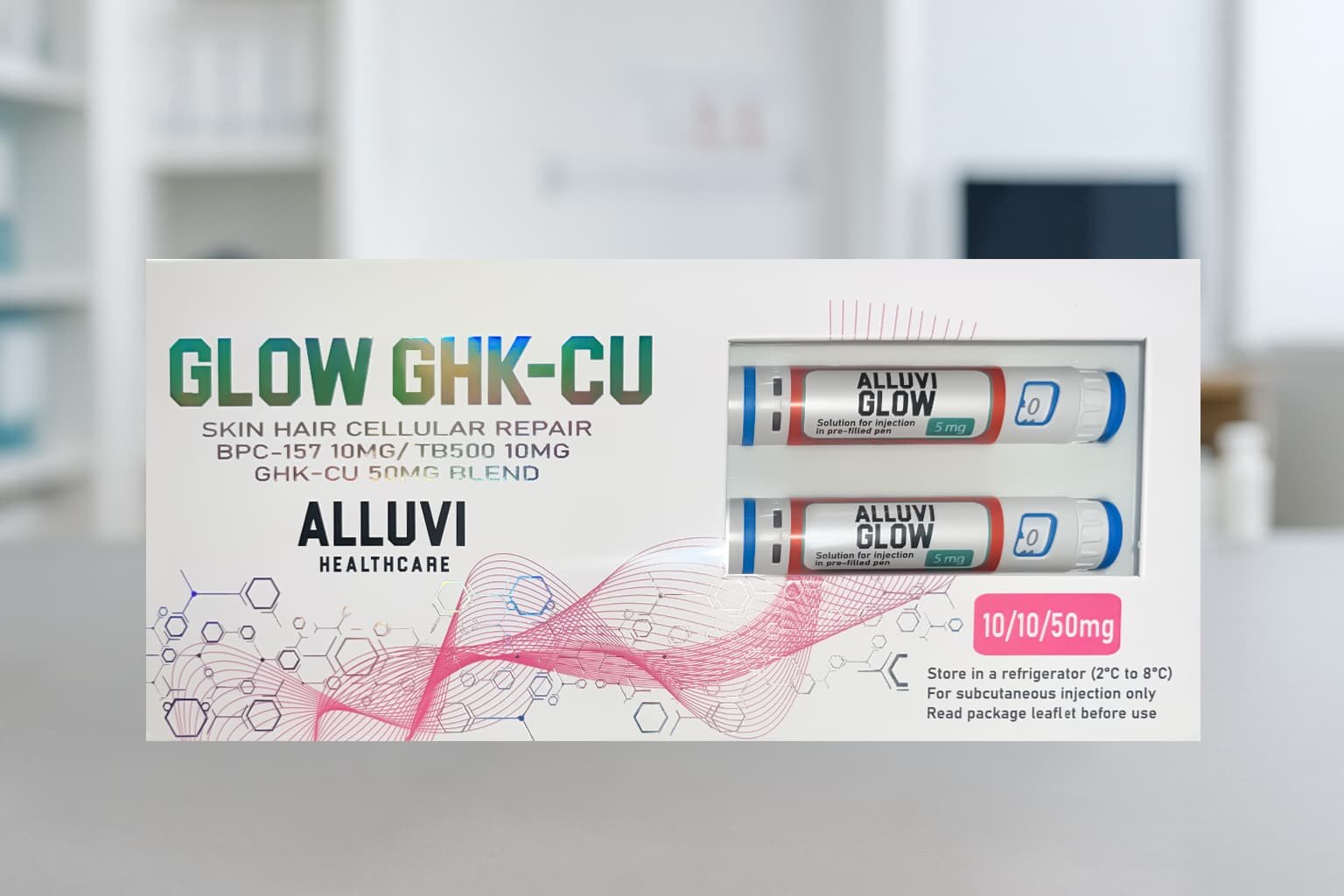
GHK Cu Technical Specifications
| Specification | Details |
|---|---|
| Peptide Sequence | Gly-His-Lys-Cu²⁺ |
| Molecular Formula | C₁₄H₂₂N₆O₄-Cu |
| Molecular Weight | 403.9 g/mol (as copper complex) |
| Purity | >99% (Third-Party HPLC Tested) |
| Appearance | Blue to purple lyophilized powder (characteristic copper color) |
| Storage | Lyophilized: Refrigerate at 2-8°C (36-46°F). Protect from light. Reconstituted: Refrigerate and use within 14 days. |
| Solubility | Soluble in bacteriostatic water or sterile saline |
Key Mechanisms of Action
1. Extracellular Matrix (ECM) Remodeling
GHK-Cu is a potent regulator of matrix metalloproteinases (MMPs) and tissue inhibitors of metalloproteinases (TIMPs). It stimulates collagen synthesis (Types I, II, III, and IV), elastin, and glycosaminoglycans (GAGs) while simultaneously modulating MMP activity to prevent excessive degradation . GHK Cu
2. Anti-Inflammatory Activity
The copper peptide downregulates pro-inflammatory cytokines, including TNF-α, IL-1, and IL-6, while promoting anti-inflammatory mediators. This dual action creates an optimal environment for tissue repair and regeneration .
3. Antioxidant Protection
GHK-Cu activates the Nrf2 pathway, upregulating endogenous antioxidant enzymes such as superoxide dismutase (SOD) and catalase. It also reduces lipid peroxidation and protects cellular DNA from oxidative damage .
4. Cellular Regeneration
Research demonstrates GHK-Cu’s ability to stimulate fibroblast proliferation, enhance keratinocyte migration, and promote angiogenesis—all critical for wound healing and tissue remodeling .
Research Applications
| Application | Mechanism |
|---|---|
| Dermal Regeneration | Stimulates collagen and elastin production; improves skin thickness, elasticity, and hydration |
| Wound Healing | Accelerates closure of acute and chronic wounds; reduces scar formation |
| Anti-Aging Research | Reverses age-related gene expression patterns; restores youthful ECM composition |
| Hair Follicle Studies | Promotes hair follicle growth and density by stimulating dermal papilla cells |
| Systemic Anti-Inflammation | Reduces systemic inflammatory markers; potential applications in age-related inflammatory conditions |
| Neuroprotection | Emerging research on cognitive function and neuronal repair |
GHK Cu Reconstitution & Research Dosage Protocol
Standard Reconstitution (50mg Vial):
-
Add 5 mL of bacteriostatic water to the vial.
-
Resulting concentration: 10 mg/mL.
Alternative Concentration (100mg Vial for Subcutaneous Use):
-
Add 10 mL of bacteriostatic water.
-
Resulting concentration: 10 mg/mL.
Research Dosage Guidelines:
| Protocol | Dose | Frequency | Duration |
|---|---|---|---|
| Standard Research | 1–2 mg per day | Daily | 4–12 weeks |
| High-Dose Therapy | 2–5 mg per day | Daily | 4–6 weeks |
| Maintenance | 1 mg | 2–3 times weekly | Ongoing |
Volume Calculation (using 10 mg/mL concentration):
-
For 1 mg dose: Draw 0.1 mL (10 units on insulin syringe)
-
For 2 mg dose: Draw 0.2 mL (20 units)
-
For 5 mg dose: Draw 0.5 mL (50 units)
Administration:
-
Route: Subcutaneous (Sub-Q) injection
-
Site: Abdomen, thigh, or upper arm
-
Timing: Typically administered in the evening due to potential temporary injection site erythema (redness)
⚠️ Important: GHK-Cu is known for causing localized injection site reactions including mild stinging, redness, and temporary discoloration. These effects are typically transient and resolve within 24–48 hours .
Synergistic Combinations
GHK-Cu is frequently combined with other peptides in research protocols:
| Combination | Synergy |
|---|---|
| GHK-Cu + BPC-157 | Enhanced wound healing; BPC-157 provides additional angiogenic and anti-inflammatory support |
| GHK-Cu + TB-500 | Comprehensive tissue regeneration; TB-500 facilitates cellular migration while GHK-Cu promotes ECM remodeling |
| GHK-Cu + Retatrutide | Systemic regeneration + metabolic optimization (see Section 2) |
2. GHK Cu Featured Product: Retatrutide (Triple Agonist Peptide)
SKU: PU-RETA-10MG
Purity: >99% (HPLC Tested)
Alias: LY-3437943, “Triple-G”
Product Overview
Retatrutide (LY-3437943) is a first-in-class triple hormone receptor agonist, representing the next evolution in metabolic research. Unlike single (GLP-1) or dual (GIP/GLP-1) agonists, Retatrutide uniquely targets GLP-1, GIP, and Glucagon (GCG) receptors simultaneously .
This triple-action mechanism offers a comprehensive approach to studying metabolic syndrome, obesity, and type 2 diabetes mellitus (T2DM) by combining appetite suppression with increased energy expenditure and enhanced fat metabolism .
Technical Specifications
| Specification | Details |
|---|---|
| Mechanism | Triple Receptor Agonist (GLP-1, GIP, Glucagon) |
| Molecular Formula | C₂₂₁H₃₄₂N₄₆O₆₅ |
| Molecular Weight | ~4735.3 g/mol |
| Purity | >99% (Third-Party HPLC Tested) |
| Format | Lyophilized Powder |
| Storage | Lyophilized: Refrigerate at 2-8°C (36-46°F). Protect from light. Reconstituted: Refrigerate at 2-8°C and use within 30 days. |
Key Mechanisms of Action
| Receptor | Effect |
|---|---|
| GLP-1 | Increases insulin secretion (glucose-dependent), delays gastric emptying, suppresses appetite |
| GIP | Enhances insulin secretion, improves fat metabolism, amplifies satiety signals |
| Glucagon | Increases energy expenditure, promotes lipolysis (fat breakdown), reduces hepatic steatosis (fatty liver) |
Note: The glucose-raising effect of glucagon is offset by the potent incretin action of GLP-1 and GIP, resulting in net glycemic improvement .
Research Applications & Clinical Findings
| Area | Key Findings |
|---|---|
| Obesity Research | Phase II trials demonstrated 24.2% mean weight reduction at 48 weeks (12 mg dose)—superior to existing dual agonists |
| Type 2 Diabetes | Significant glycemic control improvement; 100% of prediabetic participants in 8mg/12mg groups reverted to normal glycemic status |
| MASLD (Fatty Liver) | 12 mg dose reduced liver fat by an average of 86%; 86% of participants achieved <5% liver fat (total resolution) |
| Cardiometabolic Health | Improvements in blood pressure, lipid profiles, and inflammatory markers |
GHK Cu Reconstitution & Research Dosage Protocol
Retatrutide is typically administered via subcutaneous injection once weekly in research protocols.
Standard Reconstitution (10mg Vial):
-
Add 2 mL of bacteriostatic water to the vial.
-
Resulting concentration: 5 mg/mL.
Standard Reconstitution (20mg Vial):
-
Add 4 mL of bacteriostatic water.
-
Resulting concentration: 5 mg/mL.
Research Dosage Protocol (Titration Schedule):
To minimize gastrointestinal side effects, researchers often follow a dose-escalation schedule similar to clinical trials :
| Week(s) | Dosage | Volume (using 5mg/mL solution) |
|---|---|---|
| Weeks 1-4 | 2 mg once weekly | 0.4 mL (40 units) |
| Weeks 5-8 | 4 mg once weekly | 0.8 mL (80 units) |
| Weeks 9-12 | 8 mg once weekly | 1.6 mL (160 units) |
| Week 13+ | 12 mg once weekly (maintenance) | 2.4 mL (240 units) |
⚠️ Note: Always start at the lowest dose to assess tolerance. These doses reflect clinical research protocols and are intended for laboratory use only.
Administration:
-
Route: Subcutaneous (Sub-Q) injection
-
Site: Abdomen, thigh, or upper arm
-
Timing: Same day each week, with or without food
-
Storage After Reconstitution: Refrigerate at 2-8°C; use within 30 days
Synergy: GHK Cu + Retatrutide Combined Research Protocol
For researchers investigating comprehensive systemic optimization, the combination of GHK-Cu and Retatrutide offers complementary mechanisms:
| Parameter | GHK Cu | Retatrutide |
|---|---|---|
| Primary Focus | Tissue regeneration, dermal health, anti-inflammation | Metabolic optimization, weight management |
| Administration | Daily subcutaneous | Weekly subcutaneous |
| Dose Range | 1–2 mg/day | 2–12 mg/week |
| Cycle Duration | 4–12 weeks | 12–24 weeks |
| Synergistic Effect | Enhanced skin elasticity during weight loss; reduced inflammation; improved tissue integrity |
Quality Assurance
At PeptidesUnit.com, every product undergoes rigorous quality control:
| Test | Description |
|---|---|
| HPLC Analysis | High-Performance Liquid Chromatography confirms purity >99% |
| Mass Spectrometry | Molecular weight verification ensures correct peptide sequence |
| Endotoxin Testing | Ensures product is free from bacterial contamination |
| Sterility Testing | Confirms absence of microbial growth |
| Certificate of Analysis (COA) | Available upon request for every batch |
Storage & Handling Guidelines
| State | Temperature | Notes |
|---|---|---|
| Lyophilized | 2–8°C (refrigerated) | Stable for up to 12 months |
| Reconstituted | 2–8°C (refrigerated) | Use within 14–30 days depending on peptide |
| Transport | Ambient with temperature control | Discreet, insulated packaging |
Do Not Freeze after reconstitution. Avoid prolonged exposure to light.
Why Choose PeptidesUnit.com?
-
Verified Purity: Every batch independently tested for purity (>99%) and mass verification
-
Third-Party Certified: COAs available for all products
-
Research-Grade Standards: Manufactured in ISO-certified facilities
-
Lyophilized Stability: Shipped in freeze-dried powder form for maximum stability
-
Discreet Packaging: Secure, temperature-controlled shipping
-
Research Focus: Products intended for in-vitro research and laboratory use only
Frequently Asked Questions (FAQ)
Q: What is GHK Cu used for in research?
A: GHK Cu is studied for dermal regeneration, wound healing, anti-aging mechanisms, ECM remodeling, and systemic anti-inflammatory effects.
Q: Why does GHK Cu appear blue?
A: The blue color is characteristic of the copper ion complex and is normal. It confirms the presence of copper in the peptide structure.
Q: Is GHK Cu safe to inject?
A: For research purposes, GHK Cu is typically administered subcutaneously. However, all products are for laboratory use only and not approved for human consumption.
Q: How long does it take to see results in research models?
A: Dermal effects may be observed within 2–4 weeks in research models. Systemic effects may take 4–8 weeks depending on the study parameters.
Q: Can GHK Cu and Retatrutide be combined in the same syringe?
A: It is recommended to administer these peptides separately to ensure proper stability and dosing accuracy. Use separate syringes and injection sites.
Q: How should I store reconstituted Retatrutide?
A: Store refrigerated at 2–8°C (36–46°F) and use within 30 days. Do not freeze.
Q: What is the purity guarantee?
A: All products are independently tested with HPLC and mass spectrometry to confirm >99% purity. COAs are available upon request.
Legal & Safety Disclaimer
FOR RESEARCH USE ONLY. Not for human consumption, clinical therapeutic use, or veterinary use. Not intended for use in food, cosmetics, or as a dietary supplement.
This product is not a drug, medical device, or approved therapeutic agent. By purchasing GHK Cu, the buyer assumes all responsibility for the use, storage, and disposal of this product in accordance with all applicable laws and regulations.
PeptidesUnit.com does not condone the use of these products in violation of any laws, regulations, or for non-research purposes. These products are intended solely for in-vitro laboratory research and scientific investigation.
These statements have not been evaluated by the Food and Drug Administration. These products are not intended to diagnose, treat, cure, or prevent any disease.
Product Specifications Summary
| Product | SKU | Purity | Dosage Form | Concentration After Reconstitution | Research Dose |
|---|---|---|---|---|---|
| GHK-Cu | PU-GHK-50MG | >99% | Lyophilized Powder | 10 mg/mL (with 5 mL BW) | 1–2 mg daily |
| GHK-Cu | PU-GHK-100MG | >99% | Lyophilized Powder | 10 mg/mL (with 10 mL BW) | 1–2 mg daily |
| Retatrutide | PU-RETA-10MG | >99% | Lyophilized Powder | 5 mg/mL (with 2 mL BW) | 2–12 mg weekly |
| Retatrutide | PU-RETA-20MG | >99% | Lyophilized Powder | 5 mg/mL (with 4 mL BW) | 2–12 mg weekly |
Shop Now at PeptidesUnit.com — Your trusted source for premium research peptides.
All products are backed by third-party testing and quality assurance.
Be the first to review “Glow GHK Cu”
Related products
Semaglutide
muscle growth
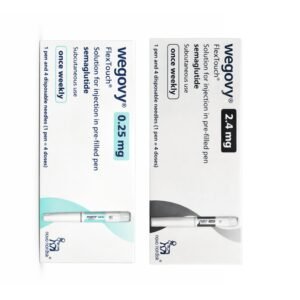
Semaglutide
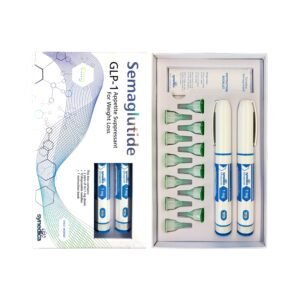
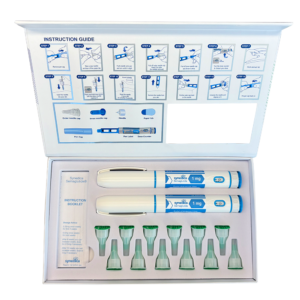
Semaglutide

Weight Loss
Pens
muscle growth
Tirzepatide
Reviews
There are no reviews yet.