
Product Overview
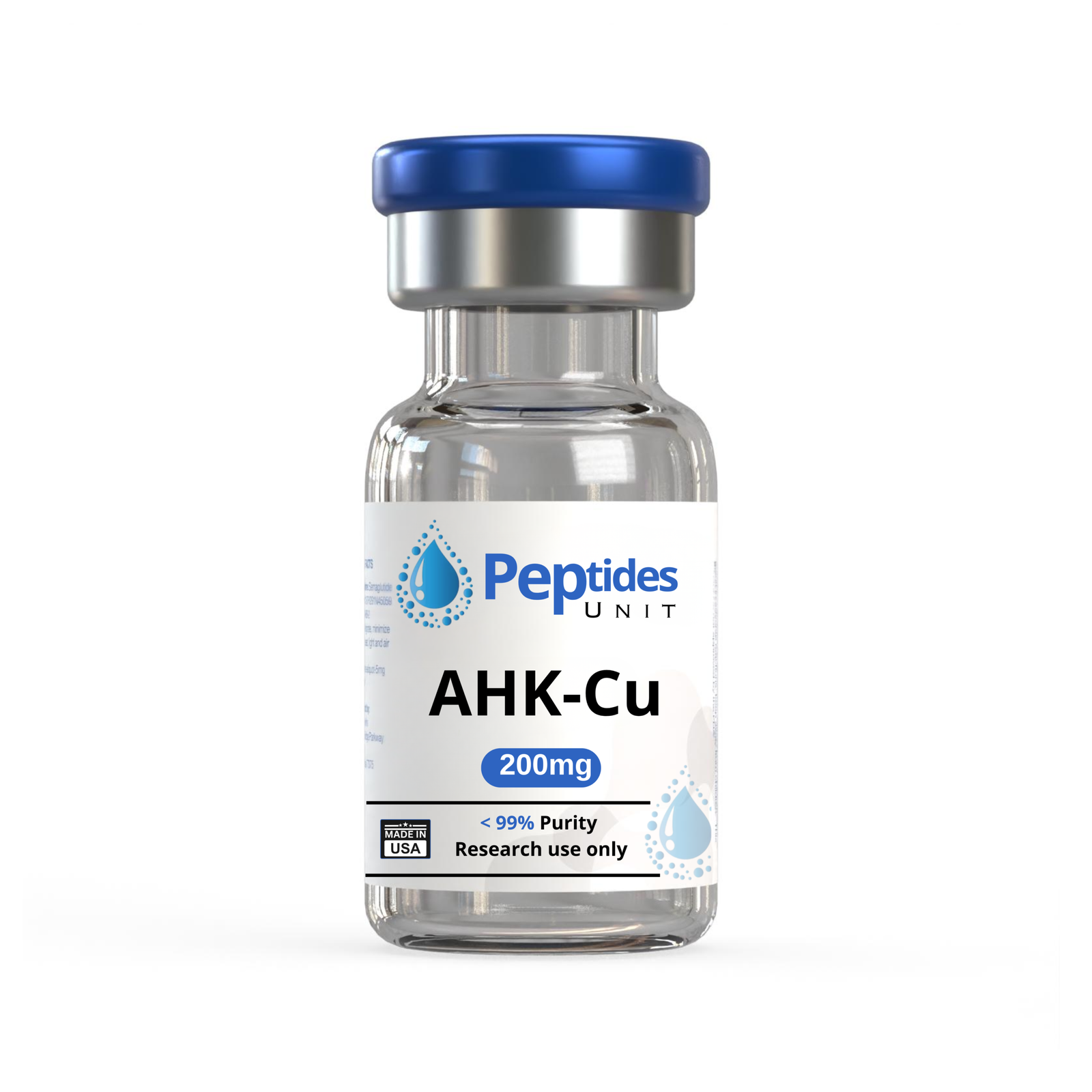
AHK-Cu (Copper Tripeptide-3) is a synthetic copper-binding tripeptide composed of the amino acids Alanine (A), Histidine (H), and Lysine (K), complexed with a copper ion . This endogenous biomolecule represents a significant advancement in peptide research, combining the biological activity of the tripeptide sequence with the catalytic properties of copper to influence key cellular processes .
The peptide’s structure allows for the targeted delivery of bioavailable copper ions to cells, where copper plays an essential role in the catalytic functions of enzymes involved in collagen formation, antioxidant defense, and tissue remodeling . Research has demonstrated that AHK-Cu stimulates fibroblast activity, promotes the synthesis of collagen and elastin, and supports the accumulation of extracellular matrix components . These properties make AHK-Cu a molecule of significant interest in dermatological science, wound healing research, and tissue engineering studies .
Mechanism of Action
AHK-Cu functions as a signal peptide complex that interacts with cellular pathways involved in extracellular matrix maintenance . The copper ion is delivered to target sites where it supports enzymatic processes critical for tissue regeneration and structural integrity .
Key Research Applications:
-
Collagen and elastin synthesis studies
-
Wound healing and tissue regeneration research
-
Fibroblast activity and extracellular matrix investigations
-
Angiogenesis and endothelial cell migration studies
-
Hair follicle growth and dermal papilla cell research
Product Specifications
| Parameter | Specification |
|---|---|
| Product Name | AHK-Cu (Copper Tripeptide-3) |
| Synonyms | L-Alanyl-L-histidyl-L-lysine-copper(II) complex, Copper AHK |
| Molecular Formula | C₁₅H₂₄CuN₆O₄ |
| Molecular Weight | ~415.94 g/mol |
| Sequence | Ala-His-{Lys-Cu} |
| CAS Number | 767286-83-9 |
| Appearance | Light blue to blue lyophilized powder |
| Purity | ≥99% (by HPLC area) |
| Peptide Content | ≥70% |
| Water Content | ≤5.0% |
| Endotoxin Level | <0.25 EU/mg |
| Storage | -20°C (long-term); protected from light and moisture |
Quality Assurance
Every batch of AHK-Cu undergoes rigorous analytical testing to ensure maximum purity and research integrity:
| Test | Method | Specification |
|---|---|---|
| Identity | ESI-MS | Matches theoretical mass |
| Purity | RP-HPLC | ≥99% area |
| Sequence Confirmation | MS/MS | 100% sequence coverage |
| Copper Content | ICP-MS | Consistent with 1:1 peptide:copper ratio |
| Endotoxin | LAL Test | <0.25 EU/mg |
| Sterility | USP <71> | No growth |
Certificate of Analysis (COA) available upon request.
Storage & Reconstitution Guidelines
Storage Conditions:
-
Lyophilized (Long-term): -20°C, protected from light and moisture
-
Lyophilized (Short-term): 2°C – 8°C (refrigerated)
-
Reconstituted: 4°C for up to 7 days; avoid repeated freeze-thaw cycles
Reconstitution Protocol:
-
Allow vial to reach room temperature
-
Add 1–2 mL of sterile bacteriostatic water or 0.9% sodium chloride solution
-
Gently swirl (do not vortex) until fully dissolved
-
Allow solution to stand at 4°C for 10-15 minutes for complete reconstitution
Note: Peptides are sensitive to formulation, process, and environmental conditions that may lead to aggregation and degradation.
Important Notice
⚠️ FOR RESEARCH USE ONLY
This product is not intended for human consumption, diagnostic use, therapeutic application, or clinical administration. AHK-Cu is a research chemical intended exclusively for in-vitro and laboratory research purposes .
-
Not approved by the FDA for human use
-
Not a dietary supplement, food additive, or pharmaceutical
-
Intended solely for qualified researchers and scientific institutions
By purchasing this product, you confirm that you are a licensed researcher or laboratory professional and agree to use this compound in compliance with all applicable local, national, and international regulations.
Why Choose PeptidesUnit.com?
| Feature | Benefit |
|---|---|
| ✅ Premium Purity | ≥99% HPLC-verified purity guaranteed |
| ✅ Research-Grade Quality | Manufactured under GMP-aligned conditions |
| ✅ Third-Party Tested | Independent COA for every batch |
| ✅ Secure Packaging | Lyophilized in amber glass vials with tamper-evident seals |
| ✅ Fast Global Shipping | Discreet packaging with real-time tracking |
| ✅ Competitive Pricing | Direct-from-manufacturer pricing |
| ✅ Customer Support | Dedicated research support team |
Order Now
AHK-Cu (Copper Tripeptide-3) 5mg – ≥99% Purity
Available for immediate shipment
🛒 BUY NOW at PeptidesUnit.com
AHK-Cu Peptide: The Complete Guide to Copper Tripeptide-3 for Research
amount and purity analysis of AHK-Cu.
You can find the test details in the parameters section below.
| Target compound: | AHK-Cu |
| Testing method: | HPLC |
| Detection limit cutoff: | less than 1/20th of the usual dosage per vial |
| Result format (lyophilizate): | mg per vial and peptide purity |
| Result format (alternative): | m/m purity and peptide purity |
| Minimum amount for the test (lyophilizate): | 1 whole unopened vial with lyophilizate |
| Minimum amount for the test (raw API powder): | 30mg in sealed glass vial to prevent the sample from absorbing moisture |
| Average turnaround time: | 5 days |
In the expanding world of peptide research, AHK-Cu—also known as Copper Tripeptide-3—has emerged as one of the most fascinating subjects of scientific investigation. This copper-binding peptide complex, composed of the amino acids alanine, histidine, and lysine, has captured the attention of researchers across multiple disciplines, from dermatological science to tissue regeneration studies .
How AHK Cu Peptide works

This comprehensive guide explores everything you need to know about AHK-Cu peptide, including its structure, mechanism of action, research applications, and why researchers choose PeptidesUnit.com as their trusted source for high-quality research compounds.
What is AHK-Cu Peptide?
AHK-Cu (Alanine-Histidine-Lysine Copper Complex) is a synthetic tripeptide that forms a stable complex with a copper ion. The peptide sequence consists of three amino acids—alanine, histidine, and lysine—which create a specific structure that binds copper with high affinity .
Key Specifications
| Property | Details |
|---|---|
| CAS Number | 682809-81-0 (monohydrochloride) / 767286-83-9 |
| Molecular Formula | C₁₅H₂₄CuN₆O₄ |
| Molecular Weight | 415.93 g/mol |
| Purity (Research Grade) | ≥98% – 99% |
| Appearance | Light blue to blue solid powder |
| Storage | -20°C for long-term storage; sealed, away from moisture |
The characteristic blue color of AHK-Cu comes from the copper ion at the center of the peptide complex, which is essential for its biological activity .
The Science Behind AHK-Cu: Mechanism of Action
AHK-Cu functions as a bioactive peptide that interacts with cellular pathways involved in extracellular matrix maintenance. The copper ion plays a crucial role in the catalytic functions of various enzymes involved in collagen formation, antioxidant defense, and tissue repair processes .
How AHK-Cu Works
The primary mechanism of AHK-Cu revolves around the interaction between copper and the amino acid residues, which facilitates copper delivery to target sites. This interaction supports several cellular processes :
1. Copper Ion Delivery
Copper is an essential trace element that serves as a cofactor for numerous enzymes. The AHK peptide sequence acts as a delivery system, transporting copper ions to where they are needed most in biological systems .
2. Fibroblast Stimulation
Research indicates that AHK-Cu may encourage the proliferation and migration of fibroblasts—cells critical for producing collagen and extracellular matrix components. This stimulation may result in improved tissue structure and cellular health .
3. Enzyme Support
Copper is a critical component of antioxidant enzymes like superoxide dismutase (SOD), which protect cells from oxidative damage. AHK-Cu helps stabilize copper in its active form, supporting natural antioxidant defense mechanisms .
Key Research Applications of AHK-Cu
1. Dermatological Science Research
AHK-Cu has attracted significant attention in dermatological research for its potential impact on skin structure and cellular aging processes.
Collagen and Elastin Synthesis
Studies suggest that AHK Cu may impact the synthesis of key structural proteins including collagen, elastin, and glycosaminoglycans—all of which contribute to skin resilience, elasticity, and hydration. Research has shown that AHK-Cu can stimulate collagen type I formation by up to 300% compared to controls .
Extracellular Matrix Support
By promoting the production of extracellular matrix components, AHK Cu may help maintain the structural integrity of connective tissues .
2. Wound Healing and Tissue Regeneration
The regenerative properties of AHK Cu extend to wound healing and tissue repair research.
Angiogenesis Support
Investigations suggest that AHK Cu may stimulate the migration of endothelial cells to wound sites, fostering the development of new blood vessels—a process vital for supplying oxygen and nutrients to healing tissue .
Cellular Proliferation
Research has demonstrated that AHK Cu increases the growth and viability of dermal fibroblasts while supporting cellular proliferation. In cell culture studies, AHK Cu has been shown to stimulate fibroblast proliferation and increase cell viability .
3. Hair Growth Research
One of the most intriguing areas of AHK Cu research involves its potential effects on hair follicles.
Follicle Stimulation
Studies have shown that AHK Cu at concentrations between 10⁻¹² and 10⁻⁹ M stimulates the elongation of human hair follicles in ex vivo models. This stimulatory effect may occur through support of dermal papilla cell proliferation .
Cellular Protection
Research indicates that AHK Cu may help protect dermal papilla cells from apoptosis (programmed cell death). Treatment with AHK Cu has been shown to increase the Bcl-2/Bax ratio (favoring cell survival) and reduce levels of cleaved caspase-3 and PARP, which are markers of apoptosis .
4. Anti-Inflammatory Research
Inflammation is a factor in many dermatological conditions, and AHK Cu may possess properties relevant to inflammatory response modulation.
Cytokine Modulation
Scientists speculate that AHK Cu may help modulate inflammatory responses by influencing the production of pro-inflammatory cytokines and reducing oxidative stress in tissues .
Balance Restoration
The peptide’s potential to help restore balance in tissue immune responses may make it an attractive candidate for research into inflammatory conditions .
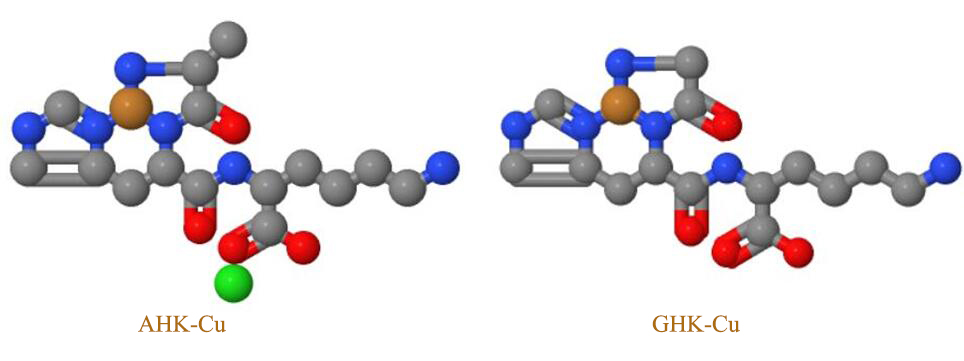
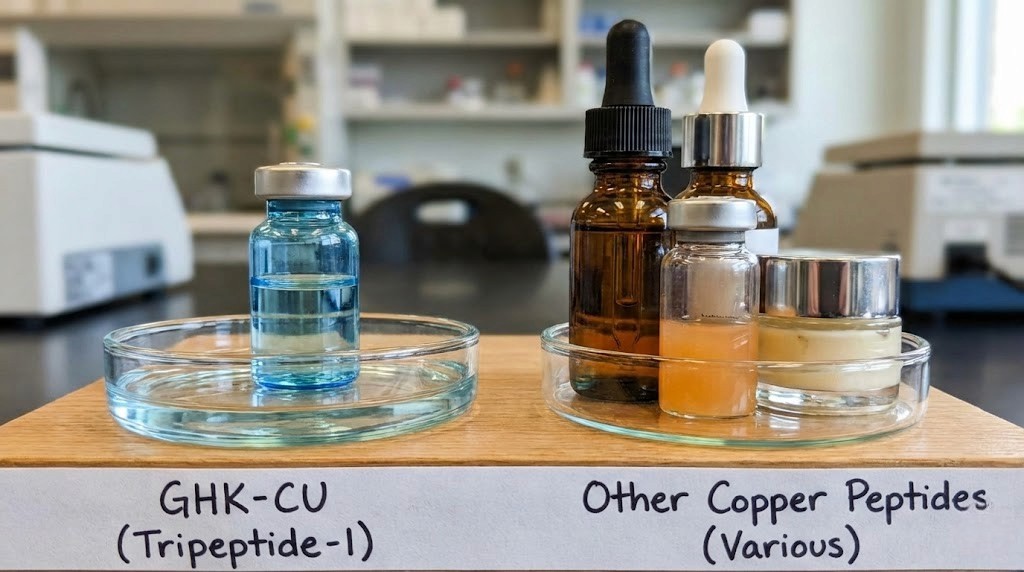
AHK-Cu vs. GHK-Cu: Understanding the Difference
While both AHK-Cu and GHK-Cu are copper-binding peptides, they have distinct structures and applications:
| Feature | AHK-Cu (Copper Tripeptide-3) | GHK-Cu (Copper Tripeptide-1) |
|---|---|---|
| Amino Acid Sequence | Alanine-Histidine-Lysine | Glycine-Histidine-Lysine |
| Primary Applications | Hair growth, collagen support, wound healing | Skin regeneration, anti-aging, wound healing |
| Research Focus | Hair follicle studies, dermal papilla cells | Fibroblast stimulation, skin remodeling |
| Key Differences | More targeted for hair research applications | Broader skin regeneration applications |
Both peptides offer unique benefits for different research applications, and the choice between them depends on specific study objectives.
Why Source AHK-Cu from PeptidesUnit.com?
When conducting peptide research, the quality and purity of your research materials are paramount. PeptidesUnit.com has established itself as a trusted supplier for researchers worldwide.
Quality Assurance
High Purity Standards
PeptidesUnit.com provides AHK Cu peptide with purity levels of ≥98%, ensuring that research results are attributable to the compound of interest rather than impurities .
Third-Party Testing
All products undergo rigorous quality control testing to verify identity, purity, and potency. Documentation including Certificates of Analysis (COA) is available for each batch.
Stable Supply Chain
With reliable inventory management and consistent quality across batches, researchers can maintain experimental continuity without supply interruptions.
Why Quality Matters in Peptide Research
Research-grade peptides must meet strict quality criteria to ensure experimental validity:
-
Reproducibility: High-purity compounds enable consistent results across experiments
-
Safety: Reduced impurities minimize confounding variables in research
-
Accurate Dosing: Precise compound weights ensure accurate concentration calculations
-
Valid Results: Research-grade purity supports publication-ready data
Handling, Storage, and Safety Considerations
Proper Storage Guidelines
To maintain the stability and integrity of AHK-Cu peptide:
-
Short-term storage: Store at 2-8°C (refrigerated)
-
Long-term storage: Store at -20°C or below
-
Protection: Keep in sealed containers, away from moisture and direct light
-
Aliquoting: For solutions, aliquot to avoid repeated freeze-thaw cycles
Research Use Only
It is important to emphasize that AHK Cu peptide is intended strictly for research and manufacturing use only. These compounds are not approved for human consumption, clinical use, or therapeutic applications .
Safety Precautions
Researchers should follow standard laboratory safety protocols when handling peptides:
-
Use appropriate personal protective equipment (PPE)
-
Work in well-ventilated areas
-
Follow institutional guidelines for handling research chemicals
-
Dispose of materials according to local regulations

Frequently Asked Questions About AHK-Cu
Q: What is the CAS number for AHK-Cu?
A: AHK-Cu has two related CAS numbers: 682809-81-0 (monohydrochloride form) and 767286-83-9 .
Q: How is AHK-Cu typically used in research?
A: AHK-Cu is commonly used in in vitro cell culture studies, ex vivo tissue models, and formulation research for topical applications .
Q: What is the solubility of AHK-Cu?
A: AHK-Cu is soluble in water and DMSO. For aqueous solutions, it can be prepared at concentrations up to 43.75 mg/mL .
Q: How should AHK-Cu solutions be stored?
A: Once prepared in solution, AHK-Cu should be aliquoted and stored at -80°C for up to 6 months or -20°C for up to 1 month to maintain stability .
Q: What purity should I expect from research-grade AHK-Cu?
A: Research-grade AHK-Cu typically has purity ≥98%, with some suppliers offering ≥99% purity .
The Future of AHK Cu Research
The scientific community continues to explore new applications and mechanisms of AHK-Cu. Emerging areas of investigation include:
Tissue Engineering
The peptide’s potential to support collagen synthesis and angiogenesis suggests relevance to the creation of tissue scaffolds designed to promote cell growth and tissue regeneration .
Stem Cell Research
Investigations suggest AHK Cu might influence the differentiation of stem cells, potentially opening new avenues for regenerative medicine research .
Chronic Wound Studies
Given its properties supporting tissue repair, AHK-Cu may be valuable in research models examining impaired healing conditions .
Conclusion
AHK-Cu (Copper Tripeptide-3) represents a significant subject of interest in peptide research, with applications spanning dermatological science, wound healing, hair growth studies, and tissue regeneration. Its unique copper-binding structure enables it to support key cellular processes including collagen synthesis, fibroblast activity, and cellular protection.
For researchers seeking reliable, high-purity AHK-Cu peptide, PeptidesUnit.com offers quality-assured compounds backed by rigorous testing and stable supply chains. With proper handling and storage, this versatile peptide can serve as a valuable tool in advancing our understanding of copper peptide biology and its potential applications.
Dr. Mark Sullivan –
I’ve been ordering research peptides from PeptidesUnit for over a year now and their consistency is unmatched. The purity and quality are always top-notch
Sarah Mitchell –
Absolutely thrilled with my order from PeptidesUnit. The peptides arrived quickly
James Rodriguez –
Really satisfied with PeptidesUnit’s products. The shipping was prompt and the peptides were exactly as described. Giving 4 stars only because I wish they offered more payment options
Emily Chen –
PeptidesUnit is my go-to source for research materials. Their prices are competitive
David Wilson –
I was a bit skeptical ordering online at first
Laura Martinez –
Good experience overall with PeptidesUnit. The product quality is great and shipping was fast. Giving 4 stars because I had a minor issue with the vial packaging
Robert Taylor –
I’ve tried several peptide suppliers and PeptidesUnit is by far the best. Their quality control is evident in every product. The peptides are pure
Amanda White –
PeptidesUnit made my first research purchase so easy. Their website is user-friendly
Kevin Brown –
I’ve been a loyal customer for several months now and PeptidesUnit has never disappointed. The quality is consistently excellent and their shipping is lightning fast. They are a trustworthy and reliable supplier. Highly recommend!
Jessica Lee –
Very happy with my purchase from PeptidesUnit. The product quality is excellent and the price is reasonable. Giving 4 stars because the tracking information could be more detailed
Daniel Miller –
PeptidesUnit is a game-changer for researchers. Their peptides are of the highest purity and their customer service is second to none. I’ve recommended them to all my colleagues. Excellent company!
Michelle Garcia –
I’m so glad I found PeptidesUnit. Their products are fantastic and their shipping is always on time. They make ordering research materials so simple and stress-free. Highly recommended for anyone in the field!
Brian Martinez –
Really solid experience with PeptidesUnit. The product quality is top-tier and the order arrived promptly. Giving 4 stars because the website could be a bit more modern
Nicole Anderson –
PeptidesUnit exceeded all my expectations. The quality of their peptides is amazing and their customer service team is incredibly helpful and friendly. I will never use another supplier. Five stars all the way!
Jason Thomas –
I’ve ordered multiple times from PeptidesUnit and every single order has been perfect. Their peptides are high-quality
Rachel Kim –
Great products and fast shipping from PeptidesUnit. I’m very satisfied with my order. Giving 4 stars because the packaging could be a bit more discreet
Steven Park –
PeptidesUnit is simply the best. Their commitment to quality and customer satisfaction is unmatched. Every order I’ve placed has arrived quickly and in perfect condition. I couldn’t be happier with their service!
Jennifer Davis –
I recently started using PeptidesUnit for my research and I’m thoroughly impressed. The peptides are pure and effective
Christopher Wilson –
This was my first time ordering from PeptidesUnit and I was blown away by the quality and service. The products arrived very quickly and the customer support was outstanding. I will definitely be a returning customer!
Ashley Moore –
Very good experience with PeptidesUnit. The product quality is excellent and the shipping was fast. Giving 4 stars because I wish they offered a loyalty program for repeat customers
Matthew Taylor –
PeptidesUnit is my absolute favorite supplier. Their peptides are always high-quality
Stephanie White –
I’ve been using PeptidesUnit for my research needs for a while now and they never disappoint. The quality is consistently excellent and their customer service is top-notch. Highly recommend them to anyone looking for quality peptides!
Andrew Harris –
Really pleased with my order from PeptidesUnit. The product arrived quickly and the quality was great. Giving 4 stars because the communication about the order status could be improved
Laura Martin –
PeptidesUnit is fantastic! Their products are of the highest quality and their shipping is super fast. I’ve never had any issues with them and they always deliver on their promises. Highly recommended!
Gregory Nelson –
I’ve used many peptide suppliers
Megan O’Brien –
Great experience with PeptidesUnit. The product quality is excellent and the shipping was fast and secure. Giving 4 stars because I wish they had a wider selection of peptides
Ryan Murphy –
PeptidesUnit is hands down the best peptide supplier out there. Their quality is unmatched
Olivia Carter –
I’m very impressed with PeptidesUnit. Their products are amazing and they always arrive on time. The ordering process is simple and their team is very professional. Highly recommended for all your research needs!
Tyler Adams –
Very satisfied with my purchase from PeptidesUnit. The product quality is excellent and the price is reasonable. Giving 4 stars because the packaging could be more secure
Brittany Foster –
PeptidesUnit is my trusted source for research peptides. Their quality is consistently outstanding and their shipping is always reliable. I’ve never been disappointed with them. Highly recommend!
Nathan Reed –
I recently discovered PeptidesUnit and I’m so glad I did. Their products are top-quality and their customer service is excellent. They answered all my questions promptly and my order arrived very quickly. Five stars!
Chelsea Cox –
Really good experience with PeptidesUnit. The product quality is great and the shipping was fast. Giving 4 stars because the website could be more intuitive
Derek Powell –
PeptidesUnit is the only supplier I trust for my research. Their quality is superb
Hannah Ward –
I can’t say enough good things about PeptidesUnit. Their products are amazing and they always deliver on time. Their customer service team is also very helpful and responsive. Truly a top-tier supplier!
Eric Simmons –
Very happy with my order from PeptidesUnit. The product quality is excellent and the shipping was prompt. Giving 4 stars because I think they could improve their packaging for better protection
Vanessa Ross –
PeptidesUnit is my favorite peptide supplier. Their products are always high-quality and their shipping is lightning fast. They are incredibly reliable and I trust them completely with my research needs. Highly recommend!
Keith Flores –
I’ve ordered from PeptidesUnit several times and they have never let me down. Their quality is consistently outstanding and their customer service is excellent. They are definitely the best in the business. Five stars!
Kimberly Coleman –
Great experience with PeptidesUnit overall. The product quality is fantastic and the shipping was fast. Giving 4 stars because I wish they offered overnight shipping options
Jonathan Hayes –
PeptidesUnit is absolutely fantastic! Their products are of the highest quality and their service is impeccable. I’ve recommended them to all my friends and colleagues. If you’re looking for quality peptides