
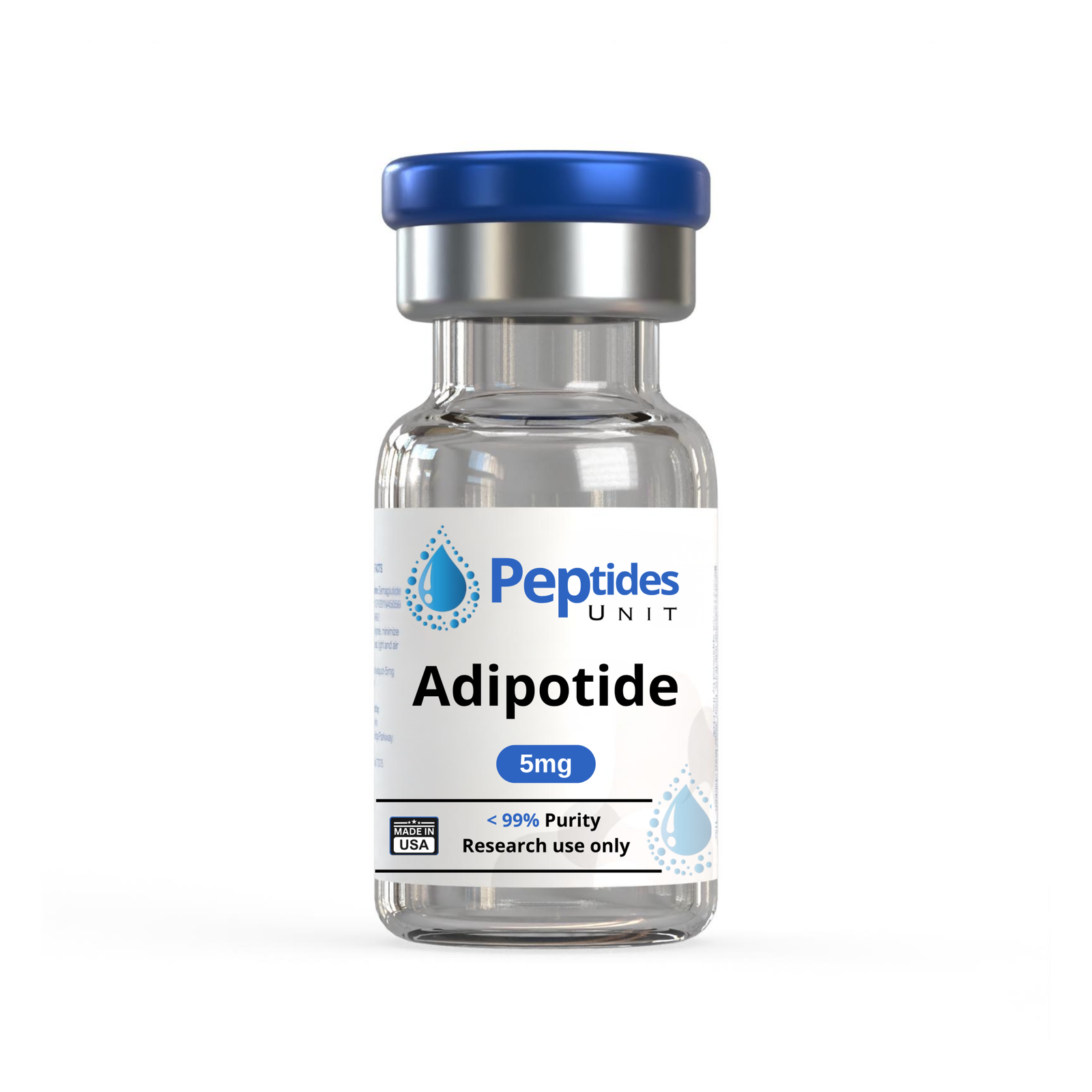
Adipotide Peptide Overview
Adipotide (also known as FTPP, HKPao, or Prohibitin-TP01) is a synthetic proapoptotic peptidomimetic designed to selectively target and induce apoptosis in the vascular endothelium supplying white adipose tissue (WAT). Developed as a novel approach to obesity research, this compound represents a “hunter-killer” peptide composed of two distinct functional domains.
The peptide structure combines a homing sequence that specifically targets prohibitin receptors expressed on adipose tissue vasculature with a proapoptotic domain that triggers mitochondrial disruption and programmed cell death. Unlike many anti-obesity drug candidates that act on the central nervous system to control appetite, Adipotide acts directly on fat tissue by disrupting its blood supply.
⚠️ Critical Research Context: As of 2026, Adipotide is not FDA-approved for human use. No completed, published human efficacy trials exist. A Phase 1 oncology trial was announced in 2012 but produced no peer-reviewed published results. The primary safety concern identified in preclinical studies is dose-dependent renal tubular toxicity.
Mechanism of Action
Adipotide functions through a targeted two-step mechanism:
Targeted Homing:
-
The CKGGRAKDC N-terminal sequence selectively binds to prohibitin receptors expressed on the surface of vascular endothelial cells that supply white adipose tissue
-
This homing domain facilitates targeted intracellular delivery specifically to fat-supporting blood vessels
Proapoptotic Action:
-
The D(KLAKLAK)2 C-terminal domain consists of D-amino acids that enhance stability
-
Once internalized, this domain migrates toward mitochondria, inducing the formation of transient pores in mitochondrial membranes
-
These pores allow efflux of cytochrome c, triggering programmed cell death (apoptosis) in endothelial cells
-
The resulting vascular disruption starves adipose tissue of blood supply, leading to fat cell resorption and metabolism
Metabolic Effects:
-
Treatment results in rapid improvement in metabolic markers, including improved insulin sensitivity and glucose tolerance, often preceding significant weight loss
-
In research models, this has been associated with decreased serum insulin and triglycerides
Key Research Applications:
-
White adipose tissue vascular biology studies
-
Obesity and metabolic syndrome research
-
Insulin resistance and glucose metabolism investigations
-
Adipose tissue function and hormone secretion studies
-
Targeted proapoptotic compound research
Product Specifications
| Parameter | Specification |
|---|---|
| Product Name | Adipotide (FTPP) |
| Synonyms | HKPao, Prohibitin-TP01, CKGGRAKDC-GG-D(KLAKLAK)2 |
| CAS Number | 859216-15-2 |
| Molecular Formula | C₁₁₁H₂₀₆N₃₆O₂₈S₂ |
| Molecular Weight | ~2,557.2 g/mol |
| Sequence | CKGGRAKDCGG-{D-(Lys-Leu-Ala-Lys-Leu-Ala-Lys)}2 |
| Length | 25 Amino Acids |
| Disulfide Bridge | Cys3-Cys8 formation |
| Purity | ≥95% (HPLC Verified) |
| Form | White to off-white lyophilized powder |
| Storage | -20°C, protected from light and moisture |
Research Background
Mechanism of Weight Loss
Adipotide induces weight loss through two primary pathways:
-
Direct Fat Metabolism: As fat cells are deprived of blood supply, they are metabolized by the body
-
Metabolic Changes: Altering the vasculature feeding excess white fat changes metabolic parameters that lead to decreased food intake
Preclinical Research Findings
Mouse Studies:
-
Diet-induced obese mice treated with Adipotide lost approximately 30% of body weight over 28 days
-
Rapid improvement in glucose tolerance observed within 2-3 days of treatment, independent of weight loss
-
Significant reduction in serum insulin and triglycerides
Rhesus Monkey Study (Published in Science Translational Medicine, 2011):
-
Spontaneously obese rhesus macaques (n=10 treated, n=5 controls) received 0.43 mg/kg subcutaneously daily for 28 days
-
Treated monkeys lost an average of 10.6% body weight (range: 7-15%)
-
38% reduction in total body fat and 27% reduction in abdominal fat
-
Marked improvements in insulin resistance (p=0.019)
-
Weight loss confirmed by MRI and DEXA to be from fat reduction, not fluid loss or muscle wasting
Encapsulated Formulation Research:
-
PEGylated liposomal encapsulation (KLA-PTNP) at 1 mg/kg (one-third the dose of unencapsulated Adipotide) resulted in 14% body weight reduction from baseline in obese mice
-
Encapsulated formulation demonstrated reduced ectopic fat accumulation in liver and muscle tissue
-
Significant reduction in adipocyte size and improved adipokine profile (reduced leptin, increased adiponectin)
Clinical Development Status
Phase 1 Trial (Announced 2012):
-
FDA cleared a Phase 1 trial in obese patients with castrate-resistant prostate cancer
-
Trial conducted by MD Anderson Cancer Center
-
No peer-reviewed published results from this trial exist as of 2026
Regulatory Status:
-
Not FDA-approved for any indication
-
No completed, published human efficacy or safety trials
-
As of 2026, not on the FDA’s 503A compoundable substances list
Key Safety Concerns
Renal Toxicity Signal:
-
The 2011 primate study reported dose-dependent, reversible renal tubular degeneration and regeneration
-
Elevated serum creatinine was observed, which normalized post-treatment
-
Kidney is the primary concern because the CKGGRAKDC peptide is processed renally after clearance from adipose binding sites
Caveats:
-
Reversibility was demonstrated only in a 28-day primate study
-
Chronic dosing safety, higher dose effects, and human tolerability remain entirely uncharacterized
-
The D(KLAKLAK)2 domain’s mitochondria-disrupting activity is not inherently selective for adipose tissue if delivered at sufficient concentration to renal tubular cells
Published Research References
Key publications include:
-
Science Translational Medicine (2011): “A Peptidomimetic Targeting White Fat Causes Weight Loss and Improved Insulin Resistance in Obese Monkeys”
-
Diabetes (2010): “Peptide Designed to Elicit Apoptosis in Adipose Tissue Endothelium Reduces Food Intake and Body Weight”
-
Nature Medicine (2004): Foundational study demonstrating weight loss in obese mice
-
Cell Metabolism (2012): “Treating Obesity Like a Tumor”
Why Development Stalled
Despite promising preclinical data, Adipotide’s clinical development was not advanced due to:
-
Uncharacterized renal toxicity threshold in humans
-
No established human tolerated dose range
-
No human pharmacokinetic profile
-
No long-term safety data in any human population
Storage & Reconstitution Guidelines
Storage Conditions:
-
Lyophilized (Long-term): -20°C, protected from light, dry, sealed
-
Lyophilized (Short-term): 2°C – 8°C (refrigerated)
-
Reconstituted: 4°C for up to 7 days; aliquot for extended storage; avoid repeated freeze-thaw cycles
-
Powder Stability: 3 years at -20°C
Reconstitution Protocol:
-
Allow vial to reach room temperature
-
Add sterile bacteriostatic water or 0.9% sodium chloride solution
-
Gently swirl (do not vortex) until fully dissolved
-
Dispense into individual aliquots to minimize freeze-thaw degradation
Note: Peptides are sensitive to formulation, process, and environmental conditions that may lead to aggregation and degradation.
Important Notice
⚠️ FOR RESEARCH USE ONLY
This product is not intended for human consumption, diagnostic use, therapeutic application, or clinical administration. Adipotide is a research chemical intended exclusively for in-vitro and laboratory research purposes.
-
Not approved by the FDA for human use
-
No completed human efficacy or safety trials published
-
Not a dietary supplement, food additive, or pharmaceutical for over-the-counter purchase
-
Renal toxicity concerns identified in preclinical studies
-
Intended solely for qualified researchers and scientific institutions
By purchasing this product, you confirm that you are a licensed researcher or laboratory professional and agree to use this compound in compliance with all applicable local, national, and international regulations.
Why Choose PeptidesUnit.com?
| Feature | Benefit |
|---|---|
| ✅ Research-Grade Quality | Manufactured under controlled laboratory conditions |
| ✅ Third-Party Tested | Independent COA for every batch |
| ✅ Secure Packaging | Lyophilized in amber glass vials with tamper-evident seals |
| ✅ Fast Global Shipping | Discreet packaging with real-time tracking |
| ✅ Competitive Pricing | Direct-from-manufacturer pricing |
Order Now
Adipotide Peptide – ≥95% Purity
Available for immediate shipment
🛒 BUY NOW at PeptidesUnit.com
For bulk orders (10+ vials), custom peptide synthesis, or wholesale inquiries, please contact our sales team at sales@peptidesunit.com. adipotide peptide
39 reviews for Adipotide
Add a review
Related products
Dr. Mark Sullivan –
I’ve been ordering research peptides from PeptidesUnit for over a year now and their consistency is unmatched. The purity and quality are always top-notch
Sarah Mitchell –
Absolutely thrilled with my order from PeptidesUnit. The peptides arrived quickly
James Rodriguez –
Really satisfied with PeptidesUnit’s products. The shipping was prompt and the peptides were exactly as described. Giving 4 stars only because I wish they offered more payment options
Emily Chen –
PeptidesUnit is my go-to source for research materials. Their prices are competitive
David Wilson –
I was a bit skeptical ordering online at first
Laura Martinez –
Good experience overall with PeptidesUnit. The product quality is great and shipping was fast. Giving 4 stars because I had a minor issue with the vial packaging
Robert Taylor –
I’ve tried several peptide suppliers and PeptidesUnit is by far the best. Their quality control is evident in every product. The peptides are pure
Amanda White –
PeptidesUnit made my first research purchase so easy. Their website is user-friendly
Kevin Brown –
I’ve been a loyal customer for several months now and PeptidesUnit has never disappointed. The quality is consistently excellent and their shipping is lightning fast. They are a trustworthy and reliable supplier. Highly recommend!
Jessica Lee –
Very happy with my purchase from PeptidesUnit. The product quality is excellent and the price is reasonable. Giving 4 stars because the tracking information could be more detailed
Daniel Miller –
PeptidesUnit is a game-changer for researchers. Their peptides are of the highest purity and their customer service is second to none. I’ve recommended them to all my colleagues. Excellent company!
Michelle Garcia –
I’m so glad I found PeptidesUnit. Their products are fantastic and their shipping is always on time. They make ordering research materials so simple and stress-free. Highly recommended for anyone in the field!
Brian Martinez –
Really solid experience with PeptidesUnit. The product quality is top-tier and the order arrived promptly. Giving 4 stars because the website could be a bit more modern
Nicole Anderson –
PeptidesUnit exceeded all my expectations. The quality of their peptides is amazing and their customer service team is incredibly helpful and friendly. I will never use another supplier. Five stars all the way!
Jason Thomas –
I’ve ordered multiple times from PeptidesUnit and every single order has been perfect. Their peptides are high-quality
Rachel Kim –
Great products and fast shipping from PeptidesUnit. I’m very satisfied with my order. Giving 4 stars because the packaging could be a bit more discreet
Steven Park –
PeptidesUnit is simply the best. Their commitment to quality and customer satisfaction is unmatched. Every order I’ve placed has arrived quickly and in perfect condition. I couldn’t be happier with their service!
Jennifer Davis –
I recently started using PeptidesUnit for my research and I’m thoroughly impressed. The peptides are pure and effective
Christopher Wilson –
This was my first time ordering from PeptidesUnit and I was blown away by the quality and service. The products arrived very quickly and the customer support was outstanding. I will definitely be a returning customer!
Ashley Moore –
Very good experience with PeptidesUnit. The product quality is excellent and the shipping was fast. Giving 4 stars because I wish they offered a loyalty program for repeat customers
Matthew Taylor –
PeptidesUnit is my absolute favorite supplier. Their peptides are always high-quality
Stephanie White –
I’ve been using PeptidesUnit for my research needs for a while now and they never disappoint. The quality is consistently excellent and their customer service is top-notch. Highly recommend them to anyone looking for quality peptides!
Andrew Harris –
Really pleased with my order from PeptidesUnit. The product arrived quickly and the quality was great. Giving 4 stars because the communication about the order status could be improved
Laura Martin –
PeptidesUnit is fantastic! Their products are of the highest quality and their shipping is super fast. I’ve never had any issues with them and they always deliver on their promises. Highly recommended!
Gregory Nelson –
I’ve used many peptide suppliers
Megan O’Brien –
Great experience with PeptidesUnit. The product quality is excellent and the shipping was fast and secure. Giving 4 stars because I wish they had a wider selection of peptides
Ryan Murphy –
PeptidesUnit is hands down the best peptide supplier out there. Their quality is unmatched
Olivia Carter –
I’m very impressed with PeptidesUnit. Their products are amazing and they always arrive on time. The ordering process is simple and their team is very professional. Highly recommended for all your research needs!
Tyler Adams –
Very satisfied with my purchase from PeptidesUnit. The product quality is excellent and the price is reasonable. Giving 4 stars because the packaging could be more secure
Brittany Foster –
PeptidesUnit is my trusted source for research peptides. Their quality is consistently outstanding and their shipping is always reliable. I’ve never been disappointed with them. Highly recommend!
Nathan Reed –
I recently discovered PeptidesUnit and I’m so glad I did. Their products are top-quality and their customer service is excellent. They answered all my questions promptly and my order arrived very quickly. Five stars!
Chelsea Cox –
Really good experience with PeptidesUnit. The product quality is great and the shipping was fast. Giving 4 stars because the website could be more intuitive
Derek Powell –
PeptidesUnit is the only supplier I trust for my research. Their quality is superb
Hannah Ward –
I can’t say enough good things about PeptidesUnit. Their products are amazing and they always deliver on time. Their customer service team is also very helpful and responsive. Truly a top-tier supplier!
Eric Simmons –
Very happy with my order from PeptidesUnit. The product quality is excellent and the shipping was prompt. Giving 4 stars because I think they could improve their packaging for better protection
Vanessa Ross –
PeptidesUnit is my favorite peptide supplier. Their products are always high-quality and their shipping is lightning fast. They are incredibly reliable and I trust them completely with my research needs. Highly recommend!
Keith Flores –
I’ve ordered from PeptidesUnit several times and they have never let me down. Their quality is consistently outstanding and their customer service is excellent. They are definitely the best in the business. Five stars!
Kimberly Coleman –
Great experience with PeptidesUnit overall. The product quality is fantastic and the shipping was fast. Giving 4 stars because I wish they offered overnight shipping options
Jonathan Hayes –
PeptidesUnit is absolutely fantastic! Their products are of the highest quality and their service is impeccable. I’ve recommended them to all my friends and colleagues. If you’re looking for quality peptides